Enterprise-Level MCP Server Development Services | Secure and Controlled Integration of AI Agents with Internal Systems
By Appar Insight, June 12, 2026
You may already have ERP, CRM, Jira, and an internal knowledge base in place. You may also have tested multiple AI tools. But in the end, your workflow still looks like this: switching between two windows and copying and pasting content back and forth. Your AI cannot see your systems, and your systems do not know how to work with AI.
Appar Technologies builds enterprise MCP Servers with custom AI agents, enabling AI to act like a real digital coworker—quickly and securely performing tasks inside your internal systems, such as retrieving data, creating records, and executing workflows. With our self-designed GUARDS security framework, we implement execution boundaries, permissions, execution logs, rollback, anomaly alerts, and cost controls all at once. This is not about adding one more chatbot to your enterprise software. It is about turning AI into a real digital teammate that can work inside your internal systems and truly become operational.
1. What is an enterprise MCP Server, and why should business leaders understand it now?
MCP (Model Context Protocol) is an open standard that allows AI models to securely access data and functions from external systems in a unified, standardized way. Put another way, once a system is equipped with an MCP Server, different AI agents can quickly access that system’s data and capabilities through MCP. In short: MCP exists to help enterprises integrate AI into real business workflows faster. It was introduced by Anthropic in November 2024, and today most major AI vendors—including Anthropic, OpenAI, Google, Microsoft, and AWS—are moving toward MCP-compatible integrations and usage.
A simple analogy: MCP for AI is like USB for computers.
In the past, every AI-system integration required custom middleware and ongoing maintenance across many APIs. With MCP, enterprises only need to plug their systems into a standard interface, and any MCP-compatible AI agent can directly access system functions. That means much faster AI deployment. For enterprises, MCP addresses one of the biggest pain points: integration complexity. Companies can move beyond isolated AI experiments in individual internal tools and toward quickly deploying complete, production-ready AI agent solutions.
MCP consists of three roles. Once you understand them, the practical use cases become much clearer:
- MCP Host (AI Agent): The AI application users actually interact with, such as an internal enterprise AI chatbot, Cursor, or Claude.
- MCP Client (AI access to enterprise systems): The component inside the AI application responsible for using these capabilities. It acts as the bridge between the AI and the server.
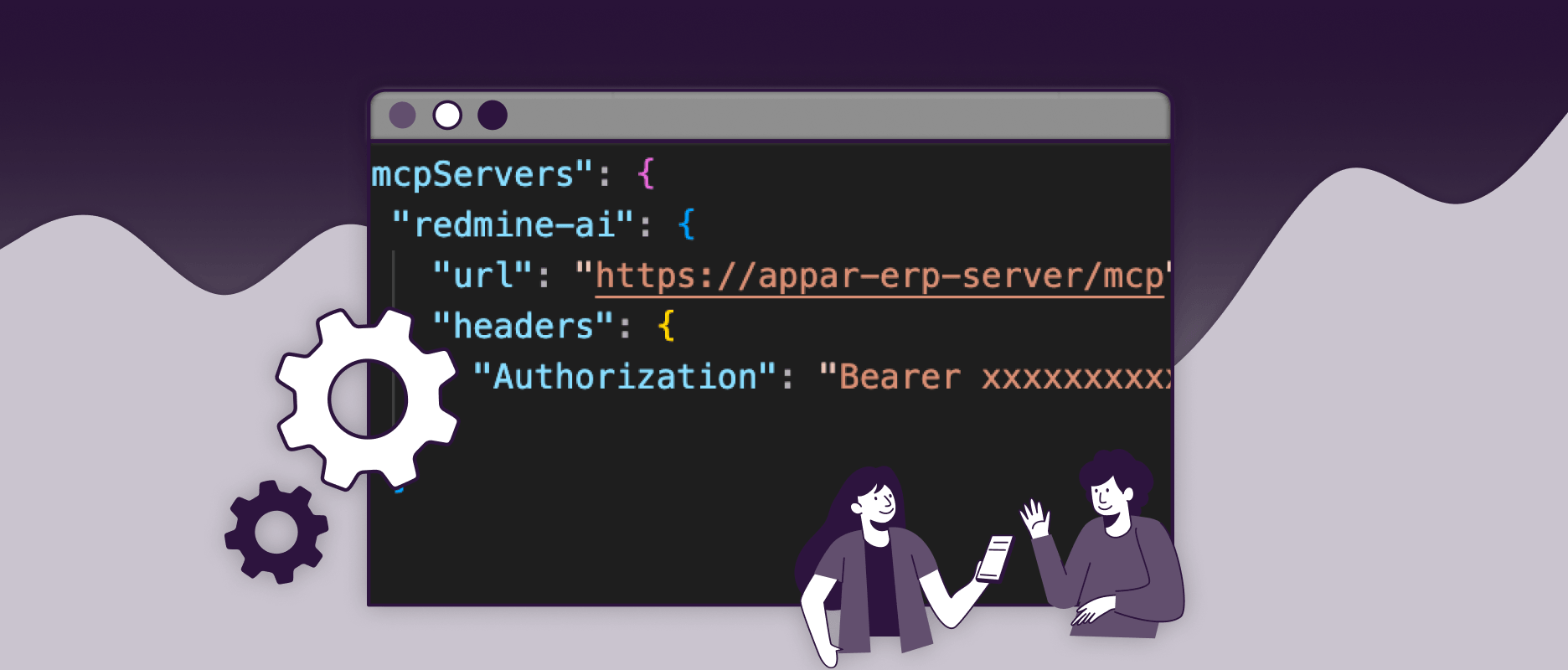
- MCP Server (enterprise system side): The layer that exposes selected capabilities of an internal system to AI in a permission-controlled way. For example, it can package issue lookup and ticket creation in Jira into tools that AI can call.
MCP Server = exposing system capabilities securely; MCP Client = enabling AI to use those capabilities.
2. Once your enterprise MCP Server is built, what comes next? Meet the six GUARDS security principles designed by Appar Technologies
When you open internal systems to AI, the biggest risk is creating something that no one truly governs. An AI agent that can read from and write to your ERP is effectively another 24/7 employee—one that may have overly broad permissions. If it is manipulated, attacked, or simply makes a mistake, the confidentiality and stability of your enterprise data are at risk.
The industry has already seen real-world attack methods, including tool poisoning, prompt injection, unauthorized access, and uncontrolled AI costs. That is why Appar Technologies uses its custom six GUARDS principles as the design and acceptance standard for every enterprise MCP project.
GUARDS by Appar – The six core security principles for Appar MCP Servers
- G – Gatekeeping (system boundary control) – Does the agent access only the systems it truly needs?
- U – User Identity (identity and permissions) – Is the AI account separated from human user accounts and limited to least privilege?
- A – Audit (traceable activity) – Is every input, output, and API call fully traceable?
- R – Rollback (failure recovery) – If something goes wrong, can the system quickly return to its previous state or trigger emergency isolation?
- D – Detection (threat alerts) – Are abnormal behaviors detected and alerted in real time?
- S – Spend Control (cost governance) – Are usage limits and spending caps visible and enforceable?
These six principles directly map to the top priorities of enterprise IT and cybersecurity leaders: RBAC access control, least privilege, auditability, compliance, incident response, and AI cost governance. We do not build features first and add security later. We make GUARDS the foundation of MCP development from day one.
3. What risks can GUARDS help prevent?
The value of GUARDS becomes much more tangible when you look at the real AI agent failures it is designed to prevent.
- Preventing AI from going out of bounds (Gatekeeping): An AI agent that should only access work order information should never have a path into finance or HR systems. If that agent is attacked, exception handling is triggered to contain the issue and stop lateral impact across other system modules.
- Preventing unclear accountability and credential leakage (User Identity): AI operates with a dedicated service account, least-privilege permissions, and short-lived credentials. It does not borrow a human account, which avoids situations where no one can determine responsibility after an incident. It also reduces the risk of long-term key exposure.
- Preventing “nobody knows what the AI did” scenarios (Audit): Every call, input, and output is logged, making accountability, audit evidence, cybersecurity review, and regulatory compliance possible.
- Preventing irreversible mistakes (Rollback): If AI changes the wrong setting or deletes data by mistake, emergency recovery can be triggered quickly.
- Preventing hidden attacks and prompt injection exploitation (Detection): Real-time monitoring detects abnormal call patterns and can alert or automatically block techniques such as tool poisoning and prompt injection.
- Preventing runaway AI bills (Spend Control): Each agent can be assigned usage quotas, budget caps, and automatic idle shutdown to avoid infinite background token spending.
By following the GUARDS framework, AI integrated with enterprise systems becomes governed, controllable, and auditable—making it a digital coworker your business can trust.
4. MCP Server use cases:
Turn internal systems into secure AI capabilities
The core value of the server side is quickly and securely exposing the capabilities of your existing systems to AI. Appar Technologies can build MCP Servers for the following systems:
- Project and ticketing systems (Jira): Let AI search issues, create tickets, close tickets, and report on issue status.
- ERP and inventory management systems: Let AI check stock levels, retrieve reports, and summarize operational data.
- CRM and sales systems: Let AI access customer data, update pipeline progress, and organize follow-up lists.
- Internal knowledge bases and document systems: Let AI precisely retrieve SOPs, policies, and technical documents to answer internal company questions.
- Databases and BI platforms: Let AI run controlled queries and generate required metrics without exposing the full database.
- HR, approval, and customer service systems: Let AI help check attendance and leave records, prefill forms, and retrieve historical support tickets.
Every MCP Server is designed according to GUARDS, so your existing systems do not need to be rewritten for AI. Instead, their capabilities are securely packaged into standardized functions that AI can understand and use.
5. MCP Client use cases:
Enable AI agents to actually use your systems
The core value of the client side is enabling your chosen AI applications or agents to complete real tasks across systems. Appar Technologies can build or integrate:
- Enterprise AI assistants and AI digital employees: A single agent that can work across multiple internal systems to help teams retrieve information, create tickets, organize progress, and generate reports.
- Engineering IDE integrations (Cursor / Claude): Connect internal ticketing systems and code systems to development tools so AI can read requirements, write code, and update progress directly.
- Department automation agents: Perform scheduled checks, generate weekly reports, detect anomalies, and proactively send alerts.
- Executive decision support assistants: Consolidate cross-system data from ERP, CRM, and project tools and answer business questions in natural language.
- Scheduled workflow agents: Automatically handle batch tasks during off-peak hours while staying within budget and quota limits.
Likewise, every client is governed by GUARDS: identity is controlled, actions are logged, and costs are capped. This ensures AI agents do not become a source of system instability, but instead function as digital coworkers with clear responsibilities and a full activity record.
MCP in practice: How Appar Technologies uses it internally =
Jira + AI employee + Cursor
We do not just build this for clients—we use it ourselves internally.
Our project management system is based on Jira, so we built a complete AI collaboration workflow around it:
Step 1 — Turn Jira into an MCP Server.
We packaged Jira’s core operations—issue lookup, ticket creation, ticket closure, and issue statistics—into an MCP Server, turning them into capabilities AI can safely call. Jira remains the single source of truth, and all PMs, engineers, and AI agents work in the same system. The MCP Server is also designed to comply with the GUARDS framework.
Step 2 — Build the MCP Client “AI employee” as a digital coworker.
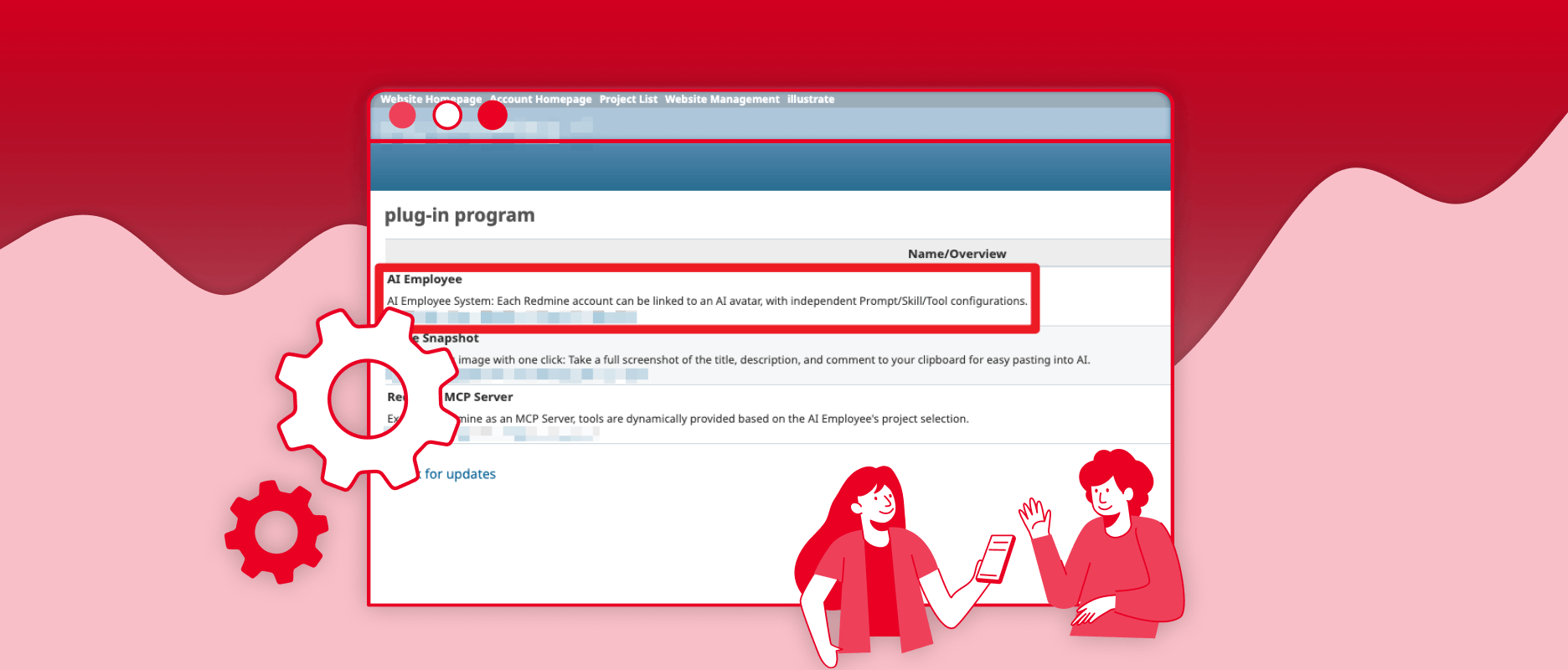
We created a Jira plugin called AI employee (the MCP Client). Authorized users can assign tickets directly to the AI employee inside Jira. It can write tickets according to the company’s ticket creation standards, close tickets, and compile issue statistics. It actually performs actions inside Jira, and users can also review its execution notes.
Step 3 — Connect Jira to Cursor through MCP.
At the same time, we connected Jira to the development tool Cursor. Cursor regularly checks Jira, identifies code-related tickets it can handle, resolves them, and writes updates back to the ticket. We have also trained it to reassign unclear or vague tickets to the PM. Once a ticket is properly prepared, it can then assign it to the AI employee.
This creates a workflow that can improve efficiency by up to 10x:
Human teammates (submit requirements and create tickets) → AI (Cursor) reads tickets, writes code, and marks issues as resolved → AI (AI employee) performs system actions at the right time, closes tickets, and compiles statistics → results return to human staff for review.
Throughout the entire process, every AI agent has a clearly defined responsibility boundary, every action is recorded, and all costs are controlled—this is what GUARDS looks like in real-world implementation. We use this workflow internally at Appar Technologies, and we genuinely find it highly practical. We believe the same capability can deliver real value to your enterprise as well.
Want to deploy a production-ready enterprise MCP Server with the GUARDS security framework?
- Appar Technologies has implemented GUARDS-based MCP Servers both internally and for multiple well-known clients.
- Security comes first: Every project is designed and accepted according to GUARDS, with cybersecurity, permissions, auditability, and cost controls prioritized from the very first line of code.
- No need to rebuild your existing systems—just give AI a secure, controlled, and practical way to use them: Your ERP, CRM, and project management systems do not need to be rewritten. We securely package them into standard AI-ready interfaces.
- End-to-end delivery from MCP Server and MCP Client to AI Agent: From exposing system capabilities to making AI actually use them, we deliver the complete solution.
Let your enterprise systems and AI work together seamlessly—this is the enterprise MCP development service from Appar Technologies.
*GUARDS by Appar – the six core security principles for Appar MCP Server design—was proposed by Appar Technologies during its internal mid-year security meeting in 2026 and is publicly introduced in this article.